
Discover Padova — Art, Science, and History
Padua is one of Italy’s most historic and culturally rich cities, where medieval streets, Renaissance squares, and vibrant university life blend seamlessly. Home to one of Europe’s oldest universities (founded in 1222), the city has been a center for groundbreaking developments in science, medicine, and astronomy. Visitors will encounter world-class art, monumental churches, serene gardens, and lively piazzas all within walking distance, making Padua a perfect destination for culture, learning, and exploration during Electrospin 2026.
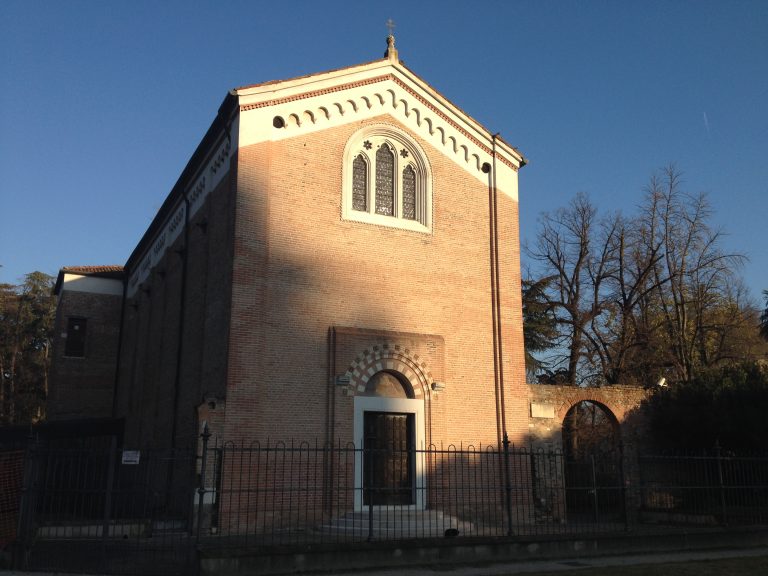
Scrovegni Chapel
The Scrovegni Chapel is one of the greatest masterpieces of Western art. Built in the early 14th century by the wealthy banker Enrico Scrovegni, it is famous for its extraordinary fresco cycle painted by Giotto di Bondone between 1303 and 1305.
Inside the small chapel, Giotto tells the story of the lives of the Virgin Mary and Jesus through a series of vivid and emotionally powerful scenes. His innovative use of perspective, natural expressions, and realistic human figures marked a turning point in the history of painting and helped pave the way for the Renaissance.
The chapel is especially admired for its stunning blue ceiling filled with golden stars and for the dramatic depiction of the Last Judgment on the entrance wall.
Today, the Scrovegni Chapel is part of the UNESCO World Heritage Site and remains one of the most extraordinary artistic treasures in Italy. Visiting it is an unforgettable experience that allows you to step inside one of the most important moments in the history of art.

Baptistery of the Cathedral
The Baptistery, located next to the Padua Cathedral in the historic center of Padua, is one of the most remarkable artistic treasures of the city. Originally built in the Romanesque period, it became famous in the 14th century for its extraordinary fresco decoration.
The interior was completely painted between 1375 and 1378 by the great painter Giusto de’ Menabuoi. His frescoes cover every surface of the building and create a breathtaking visual experience. At the center of the dome, visitors can admire a magnificent depiction of Paradise, with Christ surrounded by thousands of saints arranged in perfect circular harmony.
The cycle of paintings illustrates stories from the Bible, including the Creation, the life of John the Baptist, and scenes from the life of Jesus. The rich colors, elegant compositions, and spiritual atmosphere make the Baptistery one of the finest examples of medieval fresco painting in Italy.
Today, the Padua Baptistery is also part of the UNESCO World Heritage Site.
A visit offers the chance to discover a hidden masterpiece and experience the beauty of Padua’s great artistic heritage.
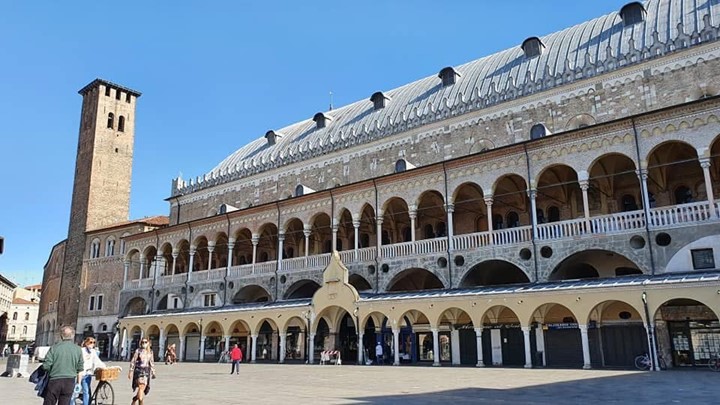
Palazzo della Ragione & Torre degli Anziani
The Palazzo della Ragione is one of the most famous historic buildings in Padua. Built in the 13th century as the city’s law court and market hall, it stands between Piazza delle Erbe and Piazza della Frutta.
Inside is the great “Salone,” one of the largest medieval halls in Europe, decorated with a remarkable 14th-century fresco cycle inspired by astrology and daily life. The palace remains a powerful symbol of Padua’s civic and commercial history.
The Torre degli Anziani rises above Piazza delle Erbe. Built in the 13th century, it was the seat of the city’s governing council, known as the “Anziani.”
For centuries, the tower overlooked the busy markets and public life of the square. Today it remains an important landmark and a symbol of Padua’s medieval history.
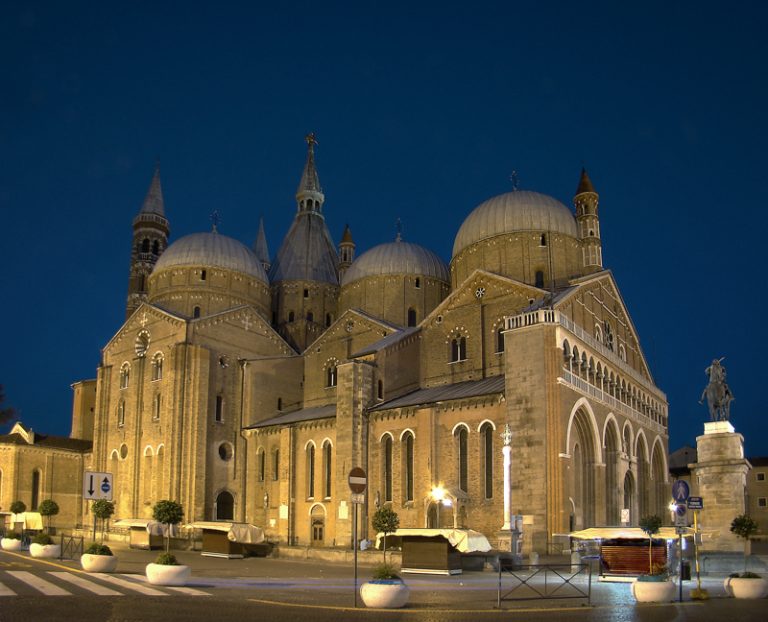
Basilica of Saint Anthony (“Il Santo”)
The Basilica of Saint Anthony of Padua is one of the most important pilgrimage sites in Padua and one of the most visited churches in Italy. Built in the 13th century, it houses the tomb of Anthony of Padua, one of the most beloved saints of the Christian tradition.
The basilica is known for its unique architecture, which blends Romanesque, Gothic, and Byzantine elements, and for its beautiful chapels decorated with masterpieces by artists such as Donatello.
Today, it is both a place of prayer and an extraordinary artistic landmark, attracting pilgrims and visitors from all over the world.
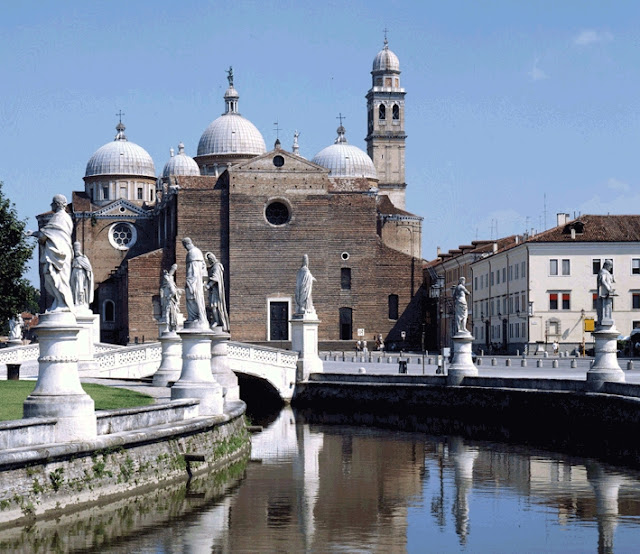
Abbey & Basilica of Santa Giustina
The Abbey of Santa Giustina in Padua is one of the largest monastic complexes in Italy and a masterpiece of Renaissance architecture. Originally founded in the 5th century, it was rebuilt in the 16th century and houses the relics of Saint Justina of Padua.
The basilica inside features a majestic nave, beautiful chapels, and artworks by important Venetian artists. Today, the abbey is not only a place of worship but also a cultural and historical treasure, offering visitors a glimpse into Padua’s spiritual and artistic heritage.
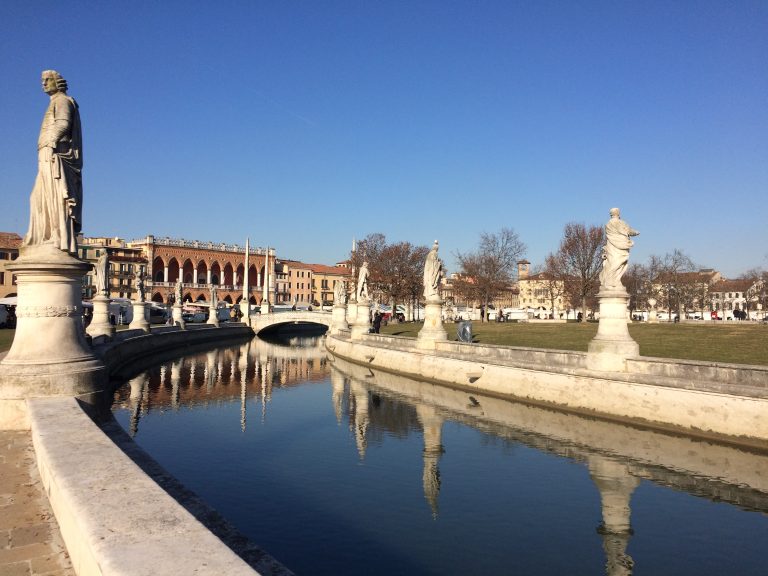
Prato della Valle
Prato della Valle in Padua is one of the largest squares in Europe and a true symbol of the city. This vast elliptical space is surrounded by a canal lined with 78 statues of important figures from Padua’s history, creating a stunning open-air gallery.
Originally a swampy area, it was transformed in the 18th century into a beautiful public square where locals and visitors can stroll, relax, and enjoy events. Today, Prato della Valle is a vibrant hub of life, history, and culture.
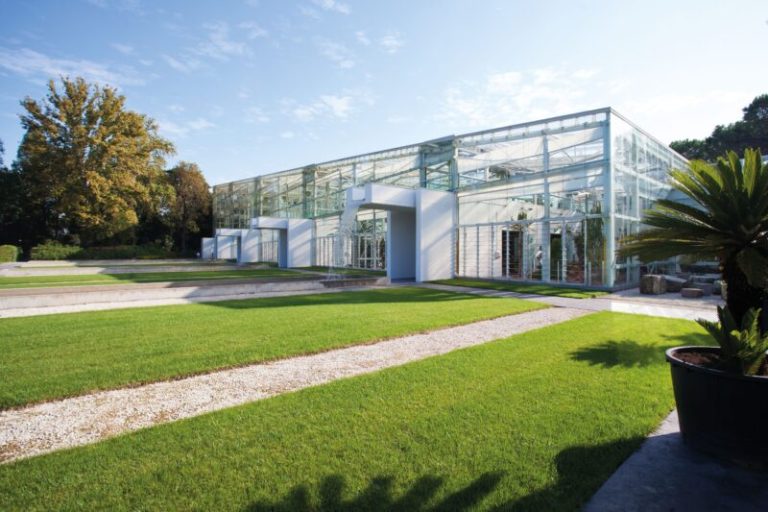
Orto Botanico (Botanical Garden)
The Orto Botanico di Padova, founded in 1545, is the world’s oldest university botanical garden still in its original location, located in Padua. Created for the study of medicinal plants, it quickly became a center for scientific research and botanical discovery.
Visitors can explore historic greenhouses, rare plant collections, and beautiful outdoor gardens, experiencing centuries of botanical tradition in a peaceful, inspiring setting.
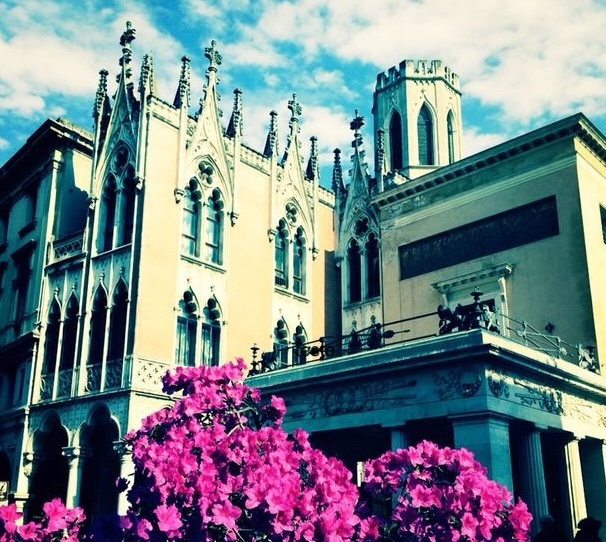
Caffè Pedrocchi
The Caffè Pedrocchi is a historic café in the heart of Padua, famous for its elegant 18th- and 19th-century architecture and vibrant cultural life. Opened in 1831, it quickly became a meeting place for artists, intellectuals, and students.
The café is also linked to the 1848 student uprisings in Padua, when it served as a hub for political debate and revolutionary ideas. Today, Caffè Pedrocchi is a symbol of Padua’s intellectual and social history, where visitors can enjoy both its historical charm and lively atmosphere.

University of Padua — Anatomical Theatre & Galileo’s Chair
The Palazzo del Bo is the historic seat of the University of Padua. Founded in 1222, the it is one of Europe’s oldest universities. Its historic Anatomical Theatre, built in 1595, was the first permanent space for anatomical teaching.
Visitors can admire the preserved Galileo Galilei chair, where the great scientist taught mathematics.
This impressive building has been at the center of academic life for centuries and is famous for its remarkable historical features.
The Palazzo del Bo remains a symbol of Padua’s long tradition of learning, science, and innovation.
Guided tours are available.

La Specola — Astronomical Observatory Museum
The Specola Astronomical Observatory in Padua is one of the oldest astronomical observatories in Italy, founded in 1767. Perched on a historic tower, it played a key role in the study of stars and celestial phenomena during the 18th and 19th centuries.
Visitors can explore the original telescopes and instruments, learn about the history of astronomy in Padua, and enjoy a panoramic view of the city from the tower. The Specola remains a fascinating place where science, history, and observation of the heavens come together.
Additional Practical Booking Resources
Padova Urbs Picta Card (multi-site ticket)
This combined ticket grants access to several heritage sites (including Scrovegni Chapel, Palazzo della Ragione, Baptistery, Oratories, Basilica, etc.).
Tips for Conference Visitors
- Plan ahead: Scrovegni Chapel and Torre degli Anziani require advance reservations — same-day tickets often sell out.
- Buy the Urbs Picta Card if you plan to see multiple UNESCO sites — it often saves money and simplifies booking.
- Botanical Garden tickets can be purchased online or by contacting the garden directly.
- For Palazzo della Ragione, you can buy tickets through VivaTicket or at tourist points near Piazza delle Erbe.